
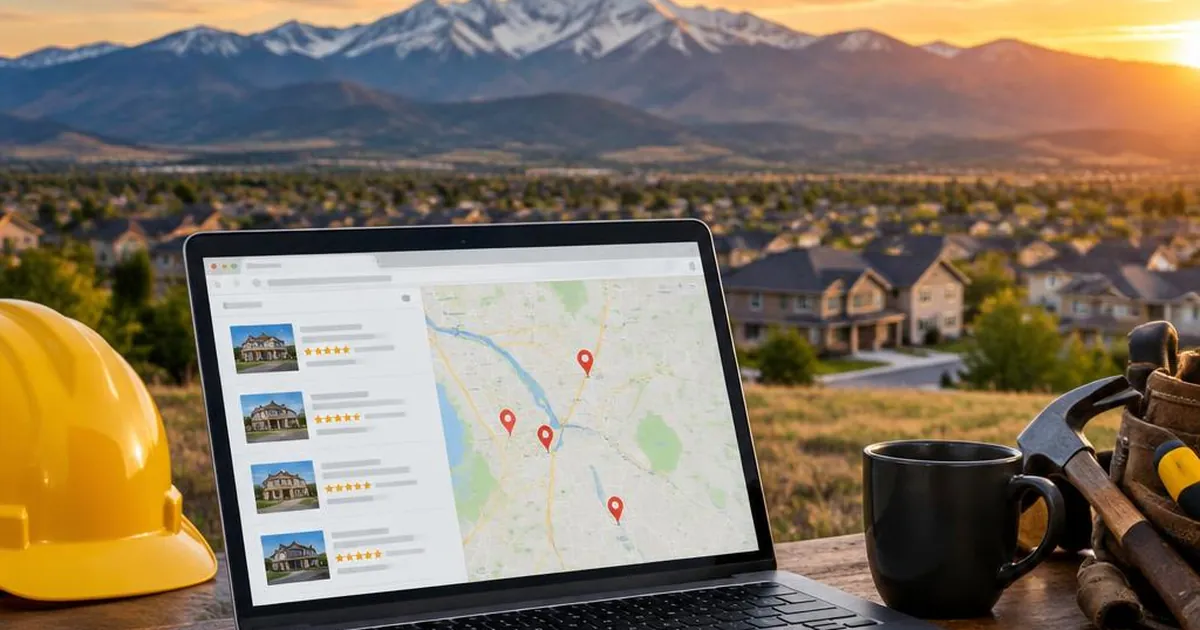
A practical, step-by-step guide for home-service and trade contractors in the south Denver metro, covering how to improve local visibility with Google Business Profile optimization, on-page SEO, citations, and reviews.
Why Local SEO Matters for South Denver Contractors
When a homeowner in Parker, Castle Rock, Highlands Ranch, or Centennial needs a contractor, most searches start on Google, often with location-based queries such as "roof repair near me" or "HVAC service Parker CO." Local SEO organizes your website and online listings so your business appears in those searches and in the Google Map Pack. For local contractors with limited advertising budgets, well-executed local SEO can increase qualified leads from customers who are actively searching for services nearby.
Start With a Complete, Optimized Google Business Profile
Your Google Business Profile (GBP) is often the first thing potential customers see. Make sure your profile uses the correct business name, phone number, and service areas. List the south Denver neighborhoods you serve, without implying storefronts in each town. Select accurate primary and secondary categories, starting with the most specific one for your trade, such as roofing contractor, plumber, or electrician. Add concise service descriptions, upload clear photos of recent projects, and post timely updates about offers or service availability. Add service-specific attributes, and regularly check your messaging and appointment settings so inbound leads are handled promptly. For a deeper walkthrough, see 11 Google Business Profile settings that move your ranking.
On-Page SEO Essentials for Contractor Websites
Your website should make it clear what you do, where you work, and how customers can contact you. Create a dedicated service page for each major offering (for example, roof repair, plumbing, or electrical) and include local place names naturally in headings and descriptive text. Put your phone number and a local address or service-area statement in the header or footer so it appears on every page. Use simple, descriptive title tags and meta descriptions that include the service and location. Add schema markup for LocalBusiness and Service where possible to help search engines understand your offerings. Because many customers call from mobile devices, prioritize fast load times and readable mobile layouts. If you are weighing how to build or rebuild the site, our guide to custom-coded websites vs templates covers how that choice affects speed and local visibility.
Build and Maintain Consistent Local Citations
Citations are listings of your business name, address, and phone number (NAP) across directories and industry sites. Start with the major aggregators and local directories used in the Denver metro, and make sure your NAP is consistent everywhere. Also claim category-specific directories for contractors and trade associations where relevant. Keep a simple spreadsheet, or use a tool, to track where your business is listed, and correct inconsistent or duplicate entries. Consistency improves local search signals and reduces confusion for customers and Google alike.
A Practical Review Strategy and Why It Matters
Customer reviews influence both visibility and buying decisions. Encourage satisfied customers to leave reviews on Google by making the process easy: send a direct review link after job completion and include simple instructions. Respond to reviews promptly and professionally. Thank positive reviewers, and address concerns in negative reviews with an offer to discuss them offline. One Google review of Egmer from a client describes our approach as combining "a deep understanding of SEO" with "a client first culture," which reflects why organic, customer-centered review practices matter when you are building local credibility. For ideas on asking without being pushy, read how to get more Google reviews.
Technical, Accessibility, and Conversion Details to Prioritize
Technical health matters. Make sure your site uses HTTPS, delivers a fast mobile experience, and avoids large unoptimized images. Accessibility basics such as clear headings, readable fonts, and alt text for images help all visitors and line up with search engine best practices. For conversions, include a clear call to action on each service page (call now, request a quote, or schedule an estimate) and a simple contact form. If you use a CRM or automation, capture source data so you can track which channels produce leads.
Measure Progress and Maintain Momentum
Local SEO is iterative. Track metrics such as GBP views and actions, organic search traffic to service pages, keyword ranking trends for local phrases, and how many leads come from search versus referrals. Schedule quarterly reviews of your citations, GBP settings, and top-performing content. For contractors who prefer ongoing support, consider a monthly plan that bundles website maintenance, local SEO, and content updates so your listings and site stay current and competitive without adding to your internal workload.